
What is Self-Realisation?
Self-Realisation is the awakening of the Kundalini, a subtle spiritual energy said to reside at the base of the spine. As this energy rises through the subtle system and passes through the Sahastrara (Crown Chakra), one may experience a state known as thoughtless awareness, in which the mind becomes quiet while remaining fully awake and aware. This state can bring a sense of inner peace and stillness, along with the experience of cool vibrations on the hands or above the head. Meditation then becomes a direct inner experience rather than simply an idea or belief, allowing “Know thyself” to become a living experience of one’s own inner awareness.

The Awakening of Kundalini
The Kundalini is described as a subtle, nurturing spiritual energy that lies dormant in the sacrum, at the base of the spine. When awakened, it rises spontaneously through the central channel, Sushumna Nadi, passing through the subtle centers along its path. This awakening is not forced through physical effort; rather, it is associated with a sincere desire for inner transformation and the experience of Self-Realisation.
As the Kundalini reaches the Sahasrara, the attention can become more settled, quiet and present. Thoughts may gradually subside, allowing a state of thoughtless awareness to be experienced while remaining fully alert. Practitioners may also experience a gentle cool sensation on the palms or above the head, traditionally described as vibrations. With regular meditation and attention to the inner state, this experience can deepen into greater stillness, balance, awareness and a sense of connection with the inner Self.
The Subtle System
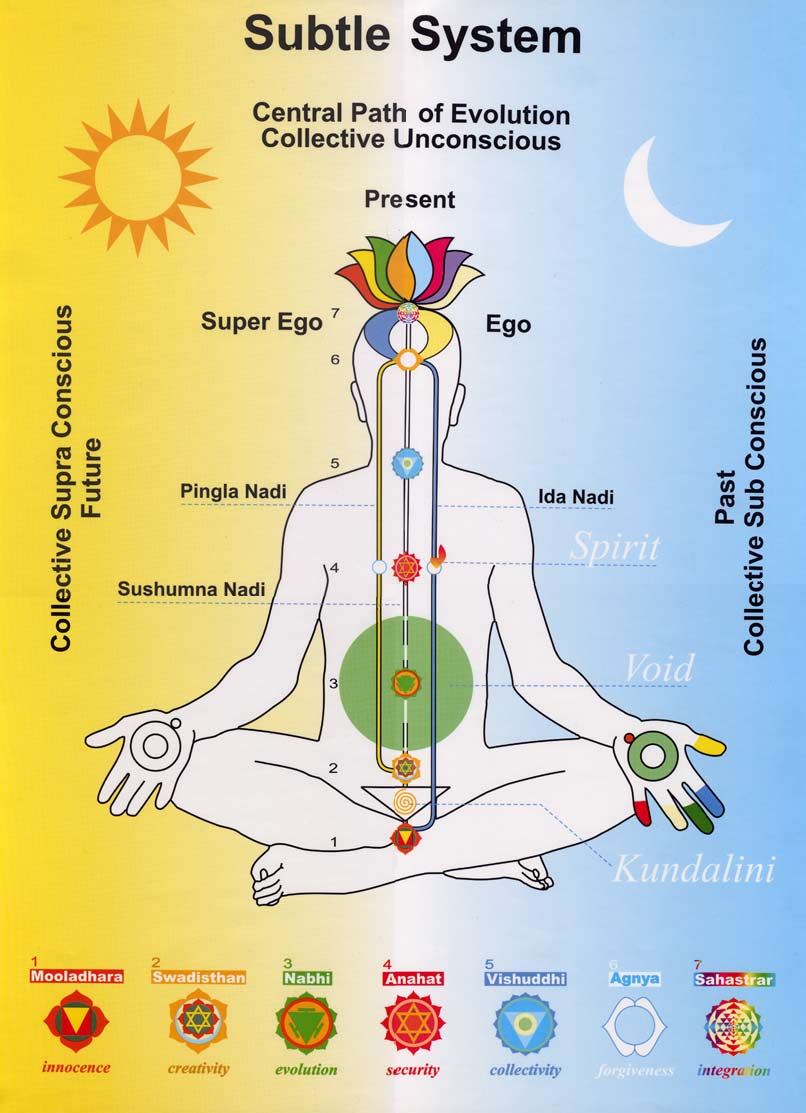
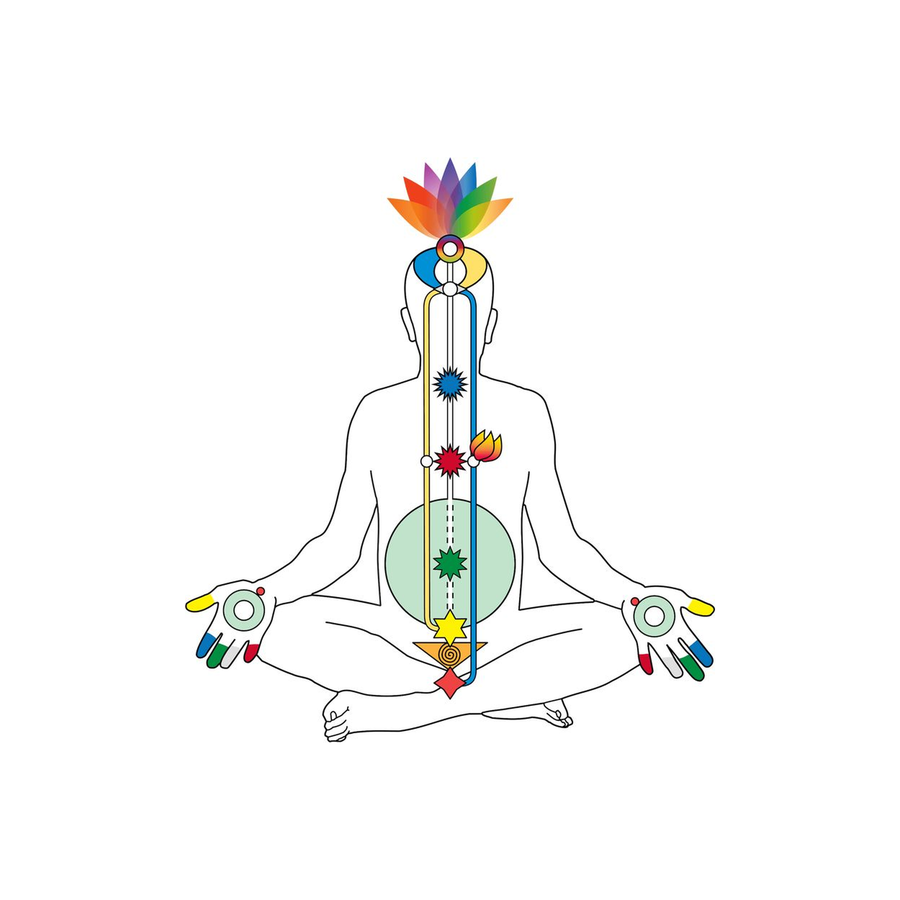
The Subtle System is the inner system within every human being through which our physical, mental, emotional, and spiritual well-being is supported. According to Sahaja Yoga, it consists of subtle energy channels known as Nadis, energy centres known as Chakras, and the Kundalini, the inner evolutionary energy present within every person. The Subtle System works in connection with the nervous system and contains three principal channels—the Ida Nadi, Pingala Nadi, and Sushumna Nadi—and seven main Chakras: Mooladhara, Swadisthan, Nabhi, Anahata, Vishuddhi, Agnya, and Sahasrara. The left channel, Ida Nadi, is associated with our desires, feelings, emotions, memories, and the past, while the right channel, Pingala Nadi, relates to our physical and mental activity, actions, and planning. Between them lies the Sushumna Nadi, the central channel of evolution through which the Kundalini rises. The seven Chakras are situated along the central pathway and are connected with different qualities that contribute to our physical, mental, and spiritual development. In Sahaja Yoga, the awakening of the Kundalini through Self-Realization is described as a process that nourishes and enlightens these Chakras, helping the subtle system become balanced and allowing the qualities within us to manifest more fully. Through regular meditation and awareness of the subtle system, one can gradually develop greater inner balance, peace, awareness, and a deeper experience of the Self.
The Three Channels
In Sahaja Yoga, the subtle system contains three principal energy channels, known as Nadis — Ida Nadi, Pingala Nadi, and Sushumna Nadi. These channels carry the subtle energy within us and are connected with the seven main Chakras. The left and right channels are associated with different aspects of our attention, while the central channel represents balance, spiritual evolution, and ascent. The Ida Nadi relates to our emotions, desires, and connection with the past, while the Pingala Nadi relates to our thoughts, actions, planning, and connection with the future. The Sushumna Nadi lies between them and represents the present moment and the path of spiritual growth. In Sahaja Yoga, maintaining balance between these three channels is an important part of meditation and inner development.
Left Channel — Ida Nadi
The Ida Nadi is the left energy channel of the subtle system and is also known as the Moon channel. It begins at the Mooladhara Chakra and travels upward along the left side of the body.In Sahaja Yoga, this channel is connected with our desires, emotions, feelings, memories, and our relationship with the past. The memories, habits, and conditioning that influence our attention are associated with this side of the subtle system. Its essential quality is joy, particularly the simple and spontaneous joy experienced in childhood.
When the left channel is balanced, it supports emotional stability, pure love, compassion, and a peaceful state of mind. When attention becomes excessively caught in the past or emotions, we may experience sadness, guilt, lethargy, or other emotional disturbances. Through meditation and Self-Realization, the left channel can return to a state of balance and allow its qualities of joy and emotional well-being to develop.
Right Channel — Pingala Nadi
The Pingala Nadi is the right energy channel of the subtle system and is also known as the Sun channel. It begins at the Swadisthan Chakra and travels upward along the right side of the body. In Sahaja Yoga, it is associated with action, planning, thinking, physical and mental activity, and our attention towards the future. This channel provides the energy needed to act, organize, concentrate, and accomplish our goals in daily life. Its balanced state supports dynamism and effective action while allowing us to remain calm and joyful. However, when too much energy is demanded from the right side, we may become excessively active, stressed, irritable, aggressive, or strongly identified with the feeling of “I” and “my.” Meditation and Self-Realization help restore harmony to the right channel, allowing activity and intelligence to function without disturbing our inner peace.
Central Channel — Sushumna Nadi
The Sushumna Nadi is the central energy channel and is described in Sahaja Yoga as the middle path of balance and spiritual evolution. It begins at the sacrum, where the Kundalini is said to reside, and rises upward through the subtle system towards the Sahasrara Chakra at the top of the head. Unlike the left and right channels, which relate to the past and future, the central channel brings our attention towards the present moment. It supports our spiritual ascent and the development of a deeper sense of inner balance, peace, and awareness. At the time of Self-Realization, the Kundalini rises through the Sushumna Nadi and nourishes the Chakras along its path. As the attention becomes established in the central channel through meditation and thoughtless awareness, one gradually becomes less caught between thoughts of the past and future and experiences greater inner stillness.
The Seven Chakras
Mooladhara
The Mooladhara is the first chakra of the subtle system and is situated at the base of the spine.In Sahaja Yoga, it is associated with innocence, wisdom, purity, and the foundation of spiritual ascent.It supports our sense of innocence and helps us develop a balanced and peaceful state of mind.The Mooladhara also gives us the quality of wisdom, helping us recognize what is beneficial for our spiritual growth.Through meditation and Self-Realization, its qualities can become established and support the awakening of the Kundalini.

Swadishthan
The Swadishthan is the second chakra of the subtle system and is associated with creativity and pure knowledge.In Sahaja Yoga, it helps us channel our attention towards learning, creating, and seeking truth.It is connected with the qualities of dynamic awareness, inspiration, and the ability to transform our attention.When balanced, the Swadisthan supports peacefulness, creativity, and a healthy balance between activity and rest.Through meditation and Self-Realization, its qualities can develop and contribute to our spiritual growth.

Nabhi
The Nabhi is the third chakra of the subtle system and is associated with peace, satisfaction, and generosity.In Sahaja Yoga, it supports our sense of inner balance, contentment, and the desire to seek higher truth.It helps us develop a peaceful relationship with ourselves and with the people around us.When balanced, the Nabhi gives us the quality of satisfaction and helps us remain steady and peaceful.Through meditation and Self-Realization, its qualities support our spiritual growth and inner evolution.

Anahat
The Anahat, or Heart chakra, is the fourth chakra of the subtle system and is associated with pure love and compassion.In Sahaja Yoga, it is the centre of the Spirit and gives us inner security, courage, and a sense of self-confidence.It helps us experience love that is pure, without attachment or expectation, and develop compassion towards others.When balanced, the Anahat supports peace, forgiveness, courage, and awareness of our true Self.Through meditation and Self-Realization, its qualities help us become established in the awareness of the Spirit.

Vishuddhi
The Vishuddhi is the fifth chakra of the subtle system and is situated at the level of the throat.In Sahaja Yoga, it is associated with collective consciousness, communication, and the quality of witnessing.It helps us develop a sense of connection with others while remaining balanced and detached.When balanced, Vishuddhi supports self-respect, peaceful communication, and the ability to observe without judging.Through meditation and Self-Realization, its qualities help us become established in the state of a witness.
Agnya
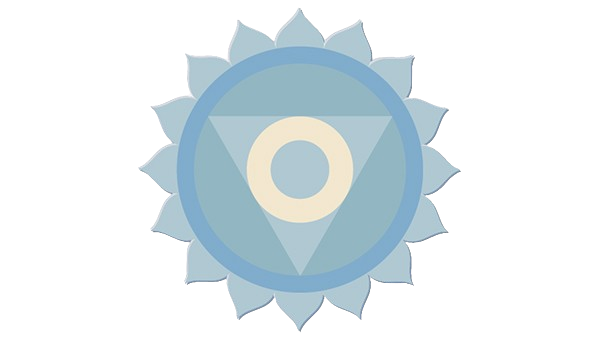
The Agnya is the sixth chakra of the subtle system and is situated at the centre of the forehead.In Sahaja Yoga, it is associated with forgiveness, humility, and the ability to overcome excessive thinking.It helps us release thoughts about the past and worries about the future, bringing our attention towards the present.When balanced, the Agnya supports peace, clarity, and the state of thoughtless awareness.Through meditation and Self-Realization, forgiveness helps the attention become free and supports our spiritual ascent.

Sahastrar
The Sahasrara is the seventh and highest chakra of the subtle system and is situated at the top of the head.In Sahaja Yoga, it is associated with spiritual ascent, integration, peace, and the experience of the Self.It is through the Sahasrara that the Kundalini completes its ascent and establishes a connection with the universal consciousness.When balanced, the Sahasrara supports thoughtless awareness, inner silence, and a deeper state of meditation.Through Self-Realization and meditation, it helps us experience greater peace, awareness, and spiritual integration.

How to meditate
Whenever it fits your schedule, you should meditate every day for at least 10 minutes. Some people find that beginning the day in a state of peace and silence makes the whole day go better. Some people find the best time is in the evening, where the soothing effects help take them into deep and nourishing sleep. And many people meditate both morning and evening and include some cleansing techniques with the evening meditation.
The meditation is a deceptively simple process and takes the form of sitting quietly to allow the Inner Energy to rise from its seat at the base of the spine to the top of the head – along the central ‘channel’ inside all of us. This Inner Energy energy cleanses the individual’s energy centres and leaves the person in a profoundly peaceful and relaxed state. Again many literary works dealing with Yoga describe this subtle road map; this is knowledge which has been available for thousands of years, not merely a few centuries
MEDITATION IS THE ONLY WAY YOU CAN GROW,BECAUSE WHEN YOU MEDITATE,
YOU ARE IN SILENCE.
YOU ARE IN THOUGHTLESS AWARENESS.
THEN THE GROWTH OF AWARENESS TAKES PLACE."
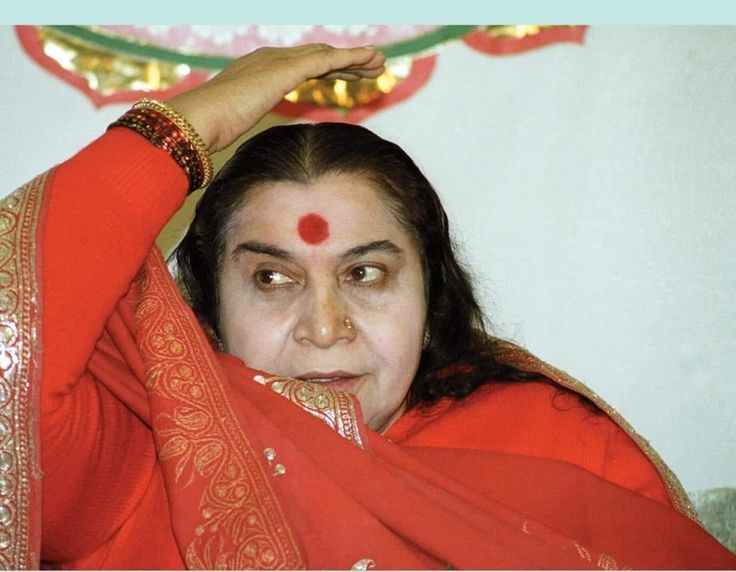
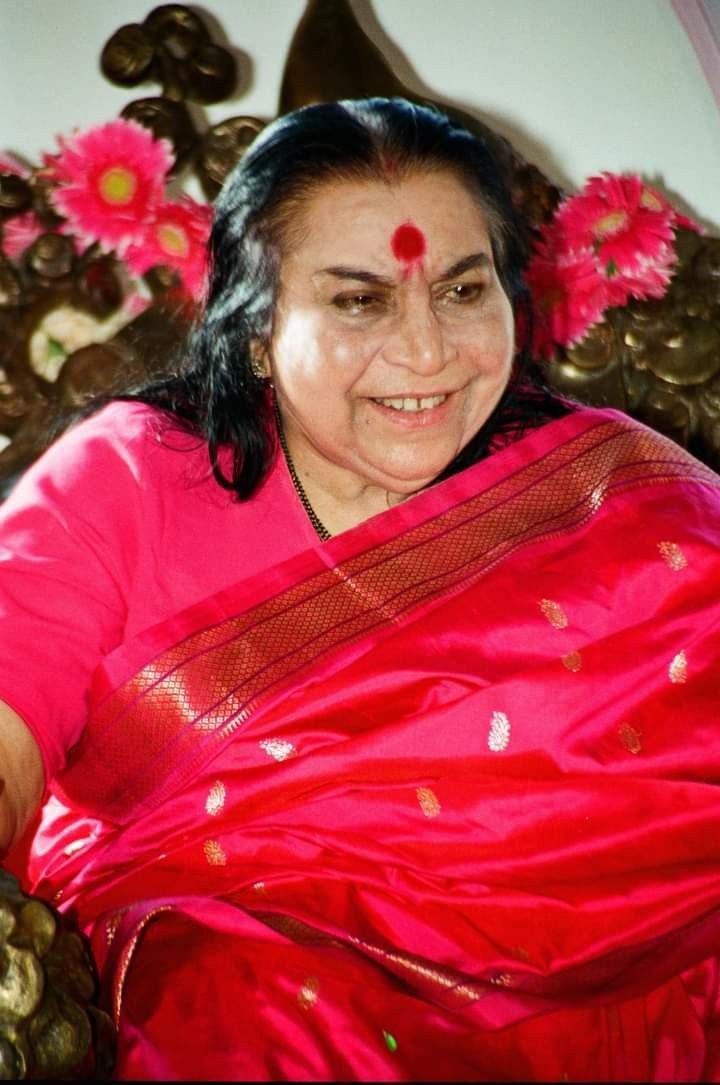
"MEDITATION IS THE ONLY WAY YOU CAN GROW.BECAUSE WHEN YOU MEDITATE,YOU ARE IN SILENCE.YOU ARE IN THOUGHTLESS AWARENESS.THEN THE GROWTH OF AWARENESS TAKES PLACE."– H.H. Shri Mataji Nirmala Devi
Settling Down
After a few moments we may feel tingling, cool or heat on our fingers or a slow ripple of movement along the spine as the Inner Energy starts to rise from the base of the spine to the top of the head. It helps if we try and ignore these sensations to start with, since we are trying to achieve a state of mental silence, where we are not dragged along with our thoughts but simply watch them float into and out of our consciousness.
Going deeper
Continuing Within
Contact Us Today
+91 9645005231
Sahaja Yoga is a unique meditation technique that enables individuals to achieve self-realization effortlessly, unlocking their inner spiritual potential.